Creating a Reaper
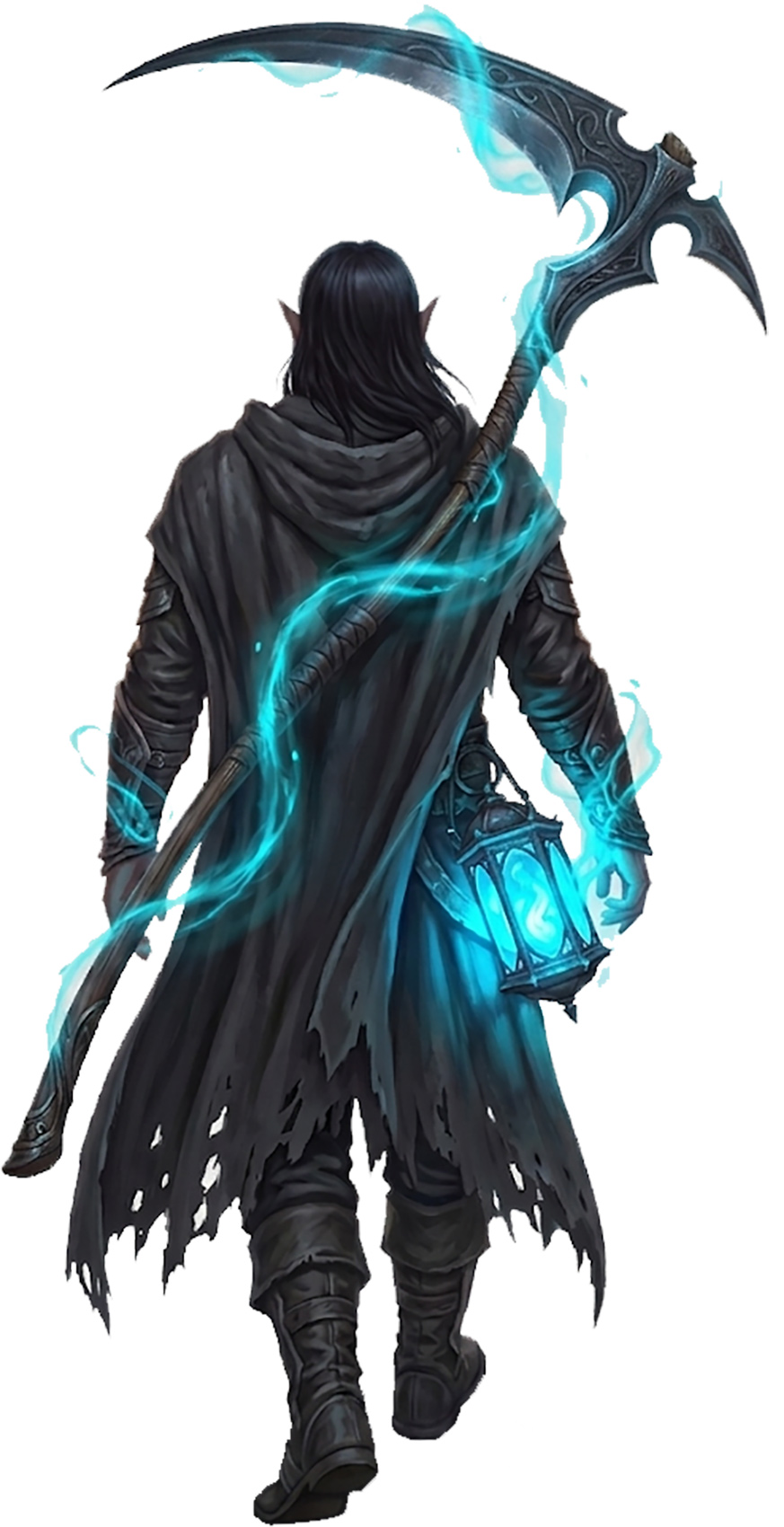
Her scythe whistling through the air, a half-elf vaults a barricade and plunges into the hobgoblins massed beyond it. Each fallen enemy sends a blue glimmer into the lantern at her belt, renewing her strength until she is the last one standing.
A human covered in dark tattoos fixes his opponent with a vacant stare and raises his hand. The orc charging toward him stops dead, its body suddenly numbed by the deathly energy coursing through it.
Moving from shadow to shadow, a halfling dressed entirely in black slips through a spectral rift and instantly reappears on a balcony behind a tyrannical prince. With one precise strike, she reaps the ruler’s soul, then vanishes through the rift and back into the night.
Whatever their Dread Tradition, Reapers share the ability to harness the magic of souls and the passage into death. Whether channeled into a terrifying display of martial prowess or a subtle manipulation of life essence, this energy permeates everything a Reaper does.
Soul Magic
Traditional monks devote themselves to studying the energy of life and the body, which they call ki. Yet some initiates, often on the fringes of their order, cannot sense this vibrant flow. Instead, they hear the echo of what comes after. Reapers draw on the power of wandering souls, spirits, and death itself. Theirs is a darker path, but one no less disciplined. Although their martial techniques resemble those of monks, their power comes not from their own life force, but from their ability to manipulate, extract, and consume the essence of the creatures around them. By channeling this energy through a spirit lantern, Reapers can heal themselves by stealing life, teleport through the Ethereal Plane, or infuse their strikes with destructive magic that hinders their opponents’ movements.
Training and Burden
Many Reapers begin their training in traditional monasteries, seeking perfection of body and spirit, before discovering that their affinity lies with life’s inevitable end. Some embrace this path in secret; others are exiled for practices deemed blasphemous. Still others are trained by secretive orders, such as the Order of the Long Death, whose sole purpose is to study death through experimentation.
Most Reapers, however, are not simply evil assassins. They often see themselves as psychopomps: benevolent guides for lost spirits, or stern judges who punish those who try to cheat death, such as necromancers and the undead. For a Reaper, becoming an adventurer means confronting the world’s conflicts and tragedies to fulfill a sacred duty—or, for the less virtuous, to sate their lantern’s growing hunger. It is a heavy burden, for the magic they wield often rejects conventional healing.
Creating a Reaper
When creating a Reaper, consider how you discovered your connection to the afterlife and how it set you apart from traditional monastic paths. Did you come so close to death that your soul remained partly detached from your body? Were you cast out of your cloister after accidentally draining a master’s life essence? Do you seek revenge through dark powers, or have you sworn an oath to a deity of death to restore the cosmic balance? What binds you to your lantern? Their strict devotion to the inevitable cycle of life and death, and the grim discipline needed to manipulate life essence without descending into madness, often lead Reapers toward neutral alignments: lawful neutral for guardians of order, or true neutral.
Quick Creation
You can make a Reaper quickly by following these suggestions. First, make Dexterity your highest ability score, followed by Charisma. Then choose the hermit background.
Special Weapon: Scythe
Martial melee weapon: 2d4 slashing damage, two-handed property, price 5 gp, weight 3 kg. The Reaper class expressly grants proficiency with it, even though it does not grant proficiency with all martial weapons. Its normal reach is 1.50 meters. It has neither the heavy, reach, nor finesse property.
The scythe is a reaper weapon despite its two-handed property. Dread Arsenal allows you to use it with Dexterity under that feature’s normal conditions; this does not give it the finesse property. It does not count as a halberd or glaive for features that specifically name those weapons. You need two hands only when attacking with it; an unarmed strike can be a kick or knee strike and does not require you to let go of the scythe.
Your starting lantern is your vessel for souls. Its operation, replacement, and recovery rules are described under Soul Lantern. Its appearance and that of your effects can reflect your story without changing their statistics.